
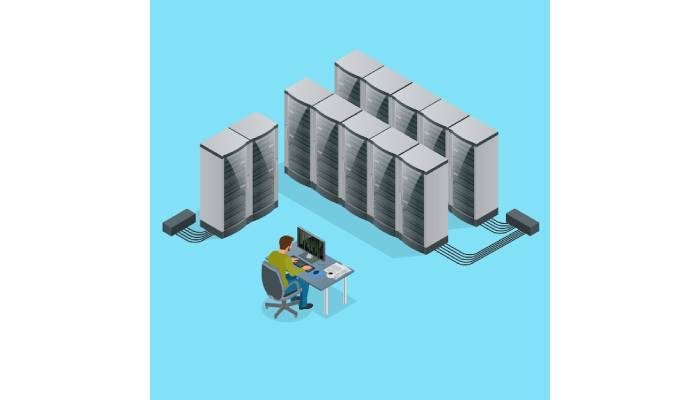
Before buying an HPE Load Balancer, it’s important to know that this solution comes from a new partnership between HPE and Edgenexus, offering a fully integrated hardware-software stack optimized for HPE servers. It supports advanced features like Layer 4-7 load balancing, SSL offload, and Web Application Firewall for secure and efficient traffic management. The product simplifies deployment by consolidating support under one vendor, which may reduce total cost of ownership. However, it may not be as widely recognized as other established brands and pricing details require direct engagement with HPE. Evaluating your infrastructure compatibility and application needs will help ensure it fits your environment well.
Background and OEM Partnership with Edgenexus
The HPE Load Balancer is offered through an OEM partnership with Edgenexus, combining Edgenexus’ advanced Application Delivery Controller (ADC) software with HPE’s reliable server hardware. This collaboration marks a shift for HPE, which previously depended on third-party external load balancer vendors, by delivering a fully integrated hardware and software solution. The integration ensures that the ADC software is fine-tuned to run optimally on HPE servers, providing high performance, scalability, and reliability suited for enterprise-grade workloads. Edgenexus technology brings advanced application delivery features directly embedded in HPE equipment, such as load balancing, security controls, and traffic management. Leveraging HPE’s global support infrastructure, this partnership simplifies assistance and reduces complexity by offering a single-vendor option for load balancing needs. The combined hardware-software stack is designed for mission-critical environments, supporting modern network demands including software-defined networking (SDN) and network functions virtualization (NFV). By filling a gap in HPE’s portfolio, this native load balancing solution is positioned to help organizations meet the requirements of digital transformation and cloud integration with a scalable, high-availability platform.

Core Features of HPE Load Balancer
The HPE Load Balancer delivers comprehensive Layer 4 to Layer 7 load balancing, supporting protocols like HTTP, HTTPS, TCP, and UDP to handle diverse application traffic efficiently. It acts as a reverse proxy, adding an extra security layer while providing granular control over application delivery. The solution includes pre-authorization and Single Sign-On (SSO) features, which strengthen access security and simplify user authentication. Continuous backend server health monitoring ensures traffic is routed only to fully operational servers, minimizing downtime and improving reliability. Integrated Web Application Firewall (WAF) capabilities protect applications from common threats such as SQL injection and cross-site scripting, offering robust security out of the box. SSL Offload functionality shifts the heavy encryption and decryption work from backend servers to the load balancer, reducing CPU load and improving overall system performance. Content caching and compression further enhance response times and reduce bandwidth usage, which is crucial for maintaining fast, efficient application delivery. Designed with modern IT environments in mind, the HPE Load Balancer supports containerized deployments and fits well within DevOps pipelines, making it suitable for agile development practices. Its flexible architecture also supports Internet of Things (IoT) and software-defined networking (SDN) use cases, providing adaptability across various network scenarios. Additionally, the load balancer integrates smoothly with virtualization platforms and cloud-native applications, enabling seamless deployment in hybrid and multi-cloud environments.
Benefits of Choosing HPE Load Balancer
Choosing the HPE Load Balancer brings several clear advantages for enterprise environments. By offering a fully integrated hardware and software stack, it simplifies both procurement and ongoing support, reducing the need to manage multiple vendors. This consolidation means fewer headaches when troubleshooting and faster resolution of issues. The solution runs on HPE servers, which are well-known for their high availability and reliability in demanding data center settings, ensuring your critical applications stay online. Performance is another strong point, as the load balancer is optimized to leverage HPE hardware capabilities, which helps handle heavy workloads efficiently. The built-in advanced security features, including integrated Web Application Firewall and SSL offload, provide protection without needing extra security appliances, saving cost and complexity. Scalability is smooth, allowing businesses to easily adapt as their application delivery demands grow or shift, especially in digital transformation initiatives or hybrid cloud setups. Additionally, the load balancer integrates well with existing HPE infrastructure tools, enabling streamlined management and operational efficiency. Access to HPE’s global support network ensures that any issues are quickly addressed, minimizing downtime. By eliminating the need for separate third-party load balancing hardware, the solution can also potentially lower the total cost of ownership, making it a cost-effective choice for enterprises seeking a reliable, high-performance load balancing solution.
- Simplifies procurement and support by offering a fully integrated hardware and software stack, reducing vendor management overhead
- Leverages robust HPE servers known for high availability and reliability in enterprise data centers
- Delivers strong performance optimized for demanding workloads, harnessing HPE hardware capabilities
- Access to HPE’s global support network ensures quick issue resolution and ongoing maintenance
- Potentially lowers total cost of ownership by eliminating separate purchases of third-party load balancers
- Easily scales to meet growing and changing application delivery demands within digital transformation projects
- Consolidated single-vendor support reduces troubleshooting complexity and speeds up incident resolution
- Flexible enough to adapt to hybrid cloud environments and emerging network technologies
- Includes advanced security features out of the box, reducing the need for additional security appliances
- Enables streamlined management through integration with existing HPE infrastructure tools
Deployment and Compatibility Considerations
The HPE Load Balancer is designed for high availability and scalability, typically deployed as a hardware ADC embedded directly on HPE servers. This makes it well-suited for critical environments where uptime is essential, such as enterprise data centers running mission-critical applications like Microsoft Exchange, Skype for Business, Oracle E-Business Suite, and VMware Horizon View. When planning deployment, it’s important to consider placing load balancers in pairs or clusters to ensure redundancy and seamless failover, minimizing downtime during hardware or network issues.
This load balancer integrates smoothly with existing HPE network and server infrastructure, which can simplify management and reduce operational overhead. It supports a variety of deployment models, from traditional on-premises setups to hybrid cloud environments and software-defined networks, giving organizations flexibility to align with their evolving IT strategies. For modern workloads, it also supports containerized and cloud-native applications, enabling efficient delivery in DevOps and microservices architectures.
Network design plays a critical role in deployment success. Careful planning around load balancer placement, traffic routing, and failover mechanisms is necessary to maintain performance and reliability. Additionally, integration with HPE management platforms can enhance monitoring and operational efficiency, allowing administrators to respond quickly to issues.
Security and compliance are also key factors. The load balancer must align with existing security policies, including SSL offload and Web Application Firewall functions, while meeting regulatory requirements. Overall, the HPE Load Balancer is a robust choice for organizations that need consistent uptime, fast failover, and seamless integration within an HPE-centered infrastructure.
Pricing Models and Licensing Options
HPE Load Balancer pricing is designed to be flexible, reflecting factors such as throughput capacity, enabled features, and chosen support levels. Customers can select from different performance tiers and add-ons like Web Application Firewall (WAF), which influence the final cost. Licensing options include both perpetual licenses for long-term ownership and subscription-based models that offer more flexibility depending on your organization’s needs. Edgenexus, the OEM partner behind the software, provides free trial options via downloadable images or cloud-based environments, letting you evaluate the load balancer’s performance before making a purchase decision. One cost advantage of choosing HPE is the consolidation of hardware and software under one vendor, which can reduce total expenses compared to managing multiple suppliers. Support packages such as HPE Foundation Care are available to enhance service and maintenance, adding another layer of value but also affecting pricing. Pricing transparency is limited, so engaging directly with HPE sales representatives is essential to receive tailored quotes based on your specific configuration and usage requirements. Volume discounts and enterprise agreements may also be negotiated, which could provide further savings for larger deployments. Overall, leveraging trial periods and consulting with HPE will help you understand the total cost and ensure the licensing model aligns with your operational goals.
Advantages and Drawbacks of HPE Load Balancer
HPE Load Balancer offers a strong single-vendor solution that simplifies support and accountability by combining hardware and software under one roof. Its feature set is quite comprehensive, including advanced Application Delivery Control (ADC), integrated Web Application Firewall (WAF), SSL offload, and modern authentication methods like Single Sign-On. Performance and scalability are well aligned with HPE server hardware, making it suitable for demanding enterprise workloads. Additionally, it supports flexible deployment options such as containerized and cloud-native environments, which is helpful for organizations adopting modern infrastructure. Global support from both HPE and Edgenexus enhances reliability and ensures rapid issue resolution.
On the downside, the HPE Load Balancer lacks the market recognition that established vendors like F5 or Citrix enjoy, which might concern buyers looking for widely proven solutions. Pricing isn’t openly published, requiring direct engagement with HPE sales teams to get detailed quotes, adding a layer of complexity during evaluation. Limited direct user reviews also make it harder to assess real-world performance and customer satisfaction. The hardware dependency reduces flexibility compared to pure software load balancers, especially in cloud-native scenarios where organizations prefer fully software-defined solutions. This means it may not be the best fit for companies heavily invested in non-HPE ecosystems or those seeking maximum agility without hardware constraints.
Comparing HPE Load Balancer with Competitors
HPE Load Balancer stands out by offering tighter hardware-software integration than many third-party hardware load balancers, which leads to better optimization when used with HPE servers. This integration provides hardware-accelerated Application Delivery Control (ADC) features that are especially beneficial for enterprise workloads, unlike cloud-native or software-only load balancers that rely mainly on software processing. Key competitors like F5 BIG-IP and Citrix NetScaler have a longer market presence, but HPE’s more modern architecture combined with its robust server ecosystem offers a compelling alternative, particularly for organizations invested in an all-HPE stack. This unified approach simplifies vendor management and consolidates support, which can reduce operational complexity. On the other hand, cloud-native load balancers usually provide greater flexibility for public cloud deployments but lack the hardware acceleration and tightly integrated features found in HPE’s solution. Open-source options such as HAProxy and NGINX are popular for their cost-effectiveness and customization potential, but they require more in-house expertise to manage and support effectively. Pricing and licensing vary widely among these solutions, so evaluating the total cost of ownership is critical. Feature sets overlap, but each product has unique strengths; therefore, the best choice depends on your specific application requirements, deployment environment, and organizational strategy. For enterprises prioritizing integrated hardware, strong global support, and streamlined vendor relations, the HPE Load Balancer is a strong contender in a competitive market.
Customer Experiences and Feedback
Many users find the HPE Load Balancer straightforward to deploy and manage, especially within existing HPE infrastructures. Scalability and performance generally meet expectations for enterprise-grade applications and digital transformation efforts. Customers note that integrated features like the Web Application Firewall and SSL offload help reduce operational complexity by combining multiple functions into a single solution. The global support from HPE and Edgenexus is often praised for being responsive and knowledgeable, which is crucial for mission-critical workloads requiring high availability. Real-world deployments confirm the product’s reliability in handling demanding traffic with minimal downtime. Users also appreciate the solution’s compatibility with containerized and cloud environments, which supports modern IT strategies. Pricing is viewed as reasonable, particularly when considering the consolidation of hardware and software support under one vendor, which also reduces vendor management efforts compared to multi-vendor setups. On the downside, some customers wish for more transparent pricing and additional user-generated content like case studies or forums to help with peer insights. There are also suggestions to boost market awareness to better compete with long-established load balancer brands. Overall, the feedback highlights a dependable, integrated load balancing solution that aligns well with enterprise needs while leaving room for improved community engagement and clearer pricing details.
Essential Factors Before Purchasing HPE Load Balancer
Before investing in an HPE Load Balancer, start by clearly assessing your application delivery needs. Understand the expected throughput, the protocols your environment relies on, and the security features necessary to protect your applications. This helps ensure the solution aligns with your technical demands. Take stock of your current HPE infrastructure since the load balancer is optimized for HPE hardware; leveraging this integration can improve performance and simplify management. Early engagement with HPE or Edgenexus sales is important to explore customized pricing, licensing options, and trial environments, which can provide hands-on experience before committing. Consider whether you prefer to consolidate support under a single vendor like HPE or if a multi-vendor approach suits your IT strategy better. Plan your deployment carefully, factoring in high availability setups, failover mechanisms, cloud integration needs, and support for containerized workloads, these are critical for maintaining uptime and scalability. Review how the load balancer fits within your network architecture, security policies, and compliance requirements to avoid integration issues down the line. Investigate its capability to handle emerging challenges such as software-defined networking (SDN), network functions virtualization (NFV), and Internet of Things (IoT) environments, which are increasingly common in modern IT landscapes. Understand the scope of support services included, and verify if additional maintenance agreements are necessary to avoid unexpected costs. Finally, seek out customer references and case studies relevant to your industry or application type to gain real-world insights on performance and support quality. This thorough evaluation will help ensure the HPE Load Balancer is the right fit for your organization’s needs.
Frequently Asked Questions
1. What are the main features of an HPE load balancer that help improve network performance?
HPE load balancers offer features like traffic distribution, SSL offloading, and health monitoring which help optimize network efficiency by distributing user requests across multiple servers, reducing load times, and ensuring availability.
2. How does an HPE load balancer handle failover and increase system reliability?
An HPE load balancer monitors server health continuously and automatically reroutes traffic to healthy servers if one fails, minimizing downtime and ensuring applications remain available without interruption.
3. Can an HPE load balancer integrate with cloud environments and hybrid infrastructures?
Yes, many HPE load balancers support integration with public clouds and hybrid setups, providing flexibility to distribute traffic across on-premises data centers and cloud resources seamlessly.
4. What security features does the HPE load balancer provide to protect applications?
HPE load balancers include features like SSL/TLS encryption, DDoS protection, and application-level firewalls that safeguard data in transit and defend applications from common network threats.
5. How complex is the setup and management of an HPE load balancer for enterprise use?
Setup requires planning around network architecture, but HPE load balancers come with user-friendly management tools and support automation, which helps reduce complexity and ongoing maintenance efforts in enterprise environments.
TL;DR The HPE Load Balancer, powered by Edgenexus technology, offers an integrated hardware-software solution optimized for HPE servers, delivering reliable and scalable load balancing with advanced features like SSL offload, web application firewall, and single sign-on. It suits enterprise workloads, supports diverse deployment scenarios including on-premises and hybrid clouds, and simplifies support through a single vendor. Pricing is flexible but requires engagement with HPE sales. While less known than some competitors, it provides solid performance and strong global support. Before buying, assess your infrastructure, application needs, and compare total cost of ownership to ensure it fits your environment.
About Author


