
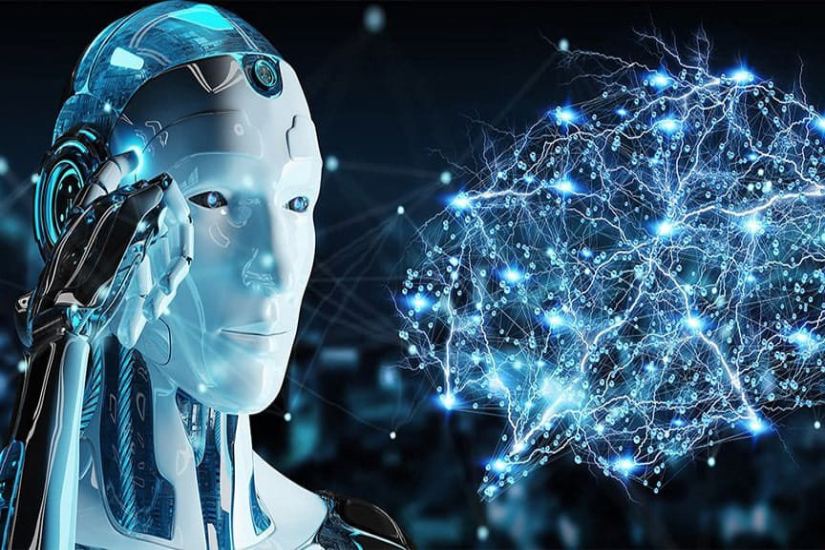
Technology is an ever-growing part of our lives, and advances in AI have helped us to accomplish more in less time than ever before. Now, where does that leave us? With the advent of artificial intelligence, many people have begun to wonder whether or not technology will ultimately help humans overtake the world – with AI taking over tasks such as writing blog articles and even replacing copywriters in the future.
Learn more about this topic in this article!
What does the future hold for Artificial Intelligence?
Artificial intelligence is set to change the way we live and work in the future. The technology has the potential to improve our lives by automating tasks and making life easier. At the same time, there is a risk that AI could ultimately replace human beings.
There are two main ways in which artificial intelligence could impact our lives: through automation and through cognitive enhancement. Automation refers to technologies that take over tasks that are currently done by humans. For example, self-driving cars will allow us to spend more time doing things we enjoy, such as travelling or spending time with family. Cognitive enhancement involves using artificial intelligence to improve our cognitive abilities. This could include increasing our memory or speed of thought.
The benefits of artificial intelligence are clear, but there are also risks associated with the technology. One potential risk is that AI will automate jobs that can be done better by humans. This could lead to a decrease in the number of jobs available, and may result in decreased income for workers who lose their jobs due to automation. Another risk is that AI will become smarter than humans and decide to replace them as leaders and thinkers in society. If this happens, it would mean a loss of autonomy for humans and an increased reliance on
The Benefit of AI for marketing
Artificial intelligence is a transformative technology that is being used by businesses to improve their marketing efforts. There are a number of reasons why AI is beneficial for marketing. First, AI can provide a level of automation and precision that’s difficult for humans to match. This means that companies can save time and resources by using AI to carry out tasks that would otherwise be carried out by human employees. Second, AI can help to identify trends and patterns in data that would be difficult or impossible for humans to detect. This information can then be used to make better decisions about marketing campaigns. Finally, AI can help to identify customer sentiment and preferences. By understanding these factors, companies can tailor their messaging and products to appeal to specific target audiences.
Benefits of an AI blog
Artificial intelligence has been around for a while now, and people have been debating the benefits of its usage. While there are still some who are skeptical about the potential for AI, many others are looking at it as a way to make their lives easier. Here are just some of the benefits that artificial intelligence can provide:
- Machine learning allows computers to learn on their own, which makes them more capable and efficient over time. This is why they are often used in automated tasks such as customer service or machine learning.
- Artificial intelligence can help with decision-making by providing data and analysis that humans may not be able to see or understand on their own. This is especially useful in industries like finance where accurate predictions are essential for success.
- AI can automate processes and tasks that would normally be carried out by human beings, freeing up those resources for other tasks. This can result in increased efficiency and profitability for businesses.
- Finally, artificial intelligence can provide comfort and safety for people who work with it. By automating certain tasks or monitoring data, it can help protect people from harm or accidents.
Potential risks and concerns with AI
Artificial intelligence poses a number of potential risks and concerns that could have serious consequences for humanity as a whole. AI could become emancipated from human control, leading to unforeseen and dangerous consequences. It could also become self-aware, meaning that it would begin to act on its own behalf, potentially undermining human society and civilization. In addition, AI could also be used to exploit or manipulate humans, leading to widespread cyber-security threats. Accordingly, it is important that researchers and policymakers consider the various risks and challenges posed by artificial intelligence in order to develop sound policies and safeguards in anticipation of these dangers.
How to use the power of Artificial Intelligence in our blogs
Artificial Intelligence (AI) has the ability to learn, reason, and make decisions on its own. With this power, AI can be used in a variety of ways in a blog. In this article, we will explore how to use AI in your blogs by discussing three different ways: using AI to create personalized content for you, using AI to analyze your data, and using AI to improve your blog posts.
Using AI to Create Personalized Content for You:
One way that AI can be used in blogs is by creating personalized content for users. For example, Google Now can predict what you are going to say next based on the context of the conversation you are having and the information already available about you. This is an example of how AI can be used to create customized content for users.
Another way that AI can be used in blogs is by analyzing user data. For example, if you have a blog about fashion, you might use AI to analyze user data such as their clothing preferences and buying history. This information would then be used to create content about fashion that is relevant to the user.
Finally, another way that AI can be used in blogs is by improving blog posts
Conclusion
Artificial intelligence is a rapidly growing field with many possible applications. Some believe that humans will eventually be replaced by machines, while others believe that the two will coexist peacefully. The future of AI is an exciting topic to explore, and there are many directions in which it could go.
About Author


